Meet the 84-Year-Old Honda Engineer Behind Your Car's Safety Tech — And His Viral Anime Hair
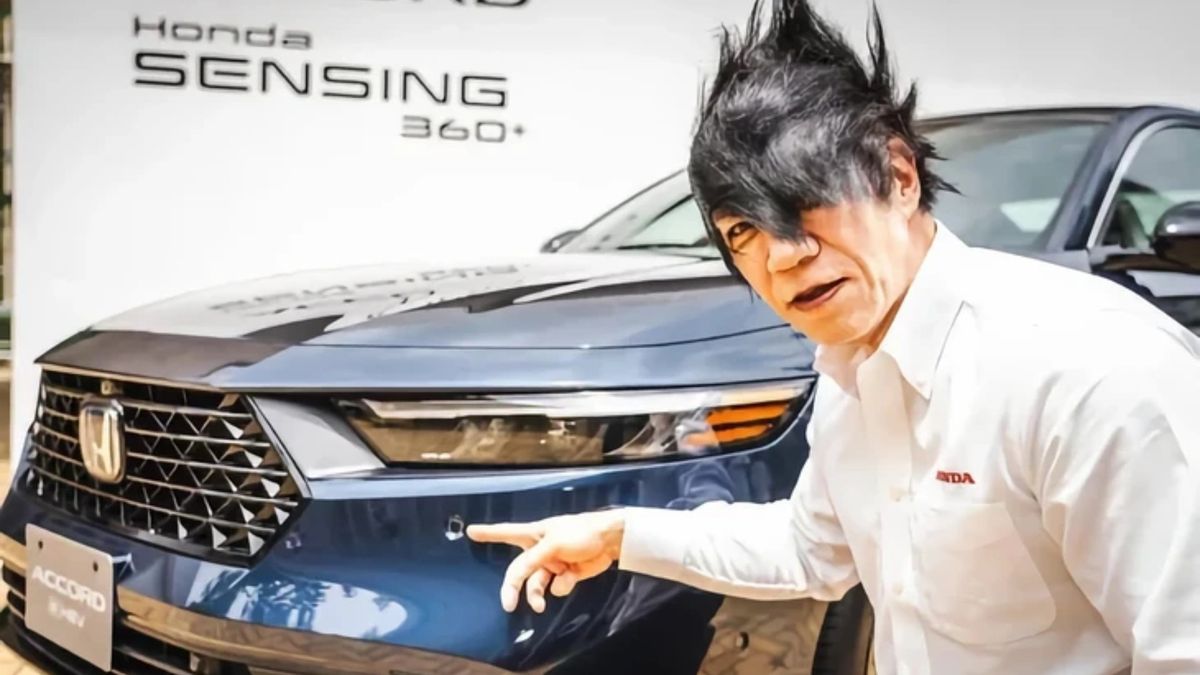
Chief Engineer Holds 250+ Patents, Bench Presses 375 Pounds
While most 84-year-olds are enjoying retirement, Shotaro Odate leads a team of 100 engineers at Honda, developing the advanced driver-assistance systems that keep millions of drivers safe. But it's not just his technical brilliance that's captured global attention — it's his gravity-defying anime-inspired hairstyle that looks like it belongs on a character from Dragon Ball Z.
Odate serves as chief engineer at Honda Motor Company, where he's the mastermind behind Honda SENSING 360+, an advanced driver-assistance suite that provides near-complete 360-degree awareness around vehicles. The system integrates multiple radar sensors and wide-view cameras to minimize blind spots and prevent collisions.
Over 250 Patents in Vehicle Safety
CarToQ reported that Odate holds more than 250 patents covering critical safety innovations. His inventions include steering sensors, advanced braking systems, intelligent seatbelt designs, and driver behavioral monitoring technologies that have been integrated into millions of Honda vehicles worldwide.
Beyond patents, Odate has published nine peer-reviewed scientific papers focusing on artificial intelligence integration and sensor fusion for real-world vehicle behavior prediction. His work has directly influenced Honda's commitment to achieving zero traffic fatalities involving Honda vehicles by 2050.
The Hair That Launched a Thousand Memes
Odate went viral across Asia and beyond in 2025 when images of his distinctive spiky hairstyle spread across social media. The look, which resembles iconic anime characters like Kakashi from Naruto and Super Saiyans from Dragon Ball, seems impossible for an 84-year-old corporate executive.
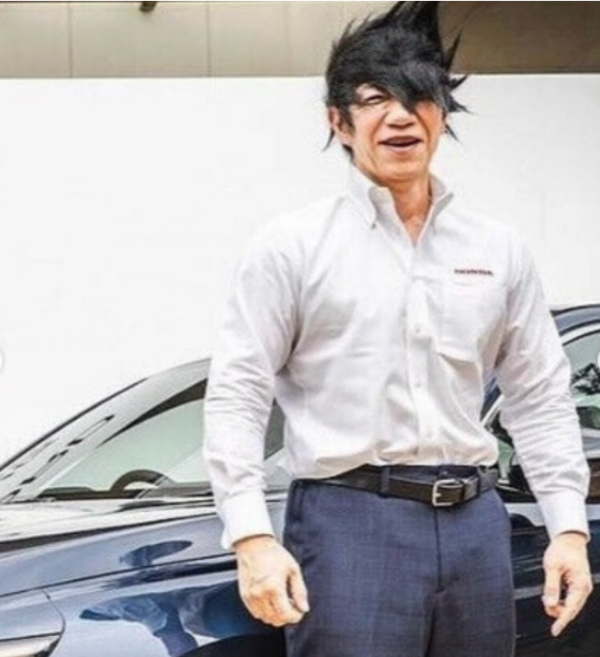
Unik, Sosok Insinyur Honda Ini Punya Gaya Rambut Mirip Anime (Instagram/@thelegionclub)
When asked about his signature style during a Japanese variety show appearance, South China Morning Post reported that Odate explained the practical origins: his hair is exceptionally stiff and curls naturally, compounded by poor sleeping habits that leave it tousled each morning.
"I just kept the naturally fluffy look my hair gets when I wake up in the morning. It feels unique," Odate told reporters. In his younger days, he spent excessive time styling conventional haircuts. Determined not to waste time, he now simply applies gel to tame the fringe that falls over his left eye.
Benching 375 Pounds at 84
Odate's physical strength is as impressive as his mental acuity. Multiple media outlets report that he can bench press 170 kilograms — approximately 375 pounds — for five repetitions. A decade of consistent training has built not only muscle but the mental toughness needed to solve complex engineering challenges.
"Whenever I hit a bottleneck in algorithm testing, I head to the gym for a few sets," Odate shared in interviews. The 375-pound barbell has become his ritual for breaking through technical hurdles on difficult projects.
Honda's "Respect for the Individual" Philosophy
While Odate's appearance might seem unconventional in a corporate setting, it perfectly aligns with Honda's founding philosophy of "Respect for the Individual." Company founder Soichiro Honda instilled values of creativity and freedom of expression that continue to define the automaker's culture.
Free Press Journal noted that Odate embodies these ideals, demonstrating that innovation extends beyond machines to the people who dare to be different. His bold personal style and engineering mastery complement each other, making him a symbol of both technical brilliance and fearless individuality.
Decades of Dedication to Safety
Born in Japan in 1941 during the country's post-World War II recovery period, Odate developed an early fascination with mechanical systems and automotive engineering. He joined Honda in the 1960s when the company was rapidly expanding from motorcycles into the global automotive market.
His early work involved vehicle testing and foundational mechanical engineering. Over time, he transitioned into safety technology projects, recognizing the rising need for systems that support drivers through sensors, alerts, and automated responses.
Building Systems That Assist, Not Replace
Odate's engineering philosophy focuses on creating technologies that enhance human awareness and reaction time while maintaining the driver's sense of control. He advocates for systems that assist the driver rather than replacing human judgment entirely.
This balanced approach to automation has influenced Honda's design principles for decades, emphasizing harmony between human decision-making and machine intelligence. His work reinforces Honda's dual-layer approach combining active safety technologies that prevent accidents with passive technologies that protect occupants when collisions occur.
Global Impact on Driver Safety
Honda SENSING, first introduced globally in the mid-2010s, played a major role in making advanced safety technologies accessible beyond luxury vehicles. Under Odate's guidance, the system was designed for scalability — meaning it could be applied to mass-market vehicles at reasonable cost while offering high-level protection.
The 2022 introduction of Honda SENSING 360+ marked a significant technological leap. As chief engineer, Odate oversaw architectural refinements, sensor fusion algorithms, and mass-production optimization that brought comprehensive 360-degree sensing to everyday vehicles.

A Cultural Icon at 84
Despite his age, Odate continues leading Honda's advanced technology development department with the energy and passion that have defined his six-decade career. His story has resonated far beyond automotive circles, inspiring conversations about age, creativity, and the importance of individuality in corporate culture.
When Odate brushed aside his signature thick bangs in front of cameras, smiled, and said in Chinese "Thank you all for your attention," he quietly reshaped the typical image of engineers. The striking contrast between his relaxed appearance and his role as a precision automotive safety engineer quickly captured global attention.