One in Five Americans Now Pays Over $1,000 a Month for Their Car

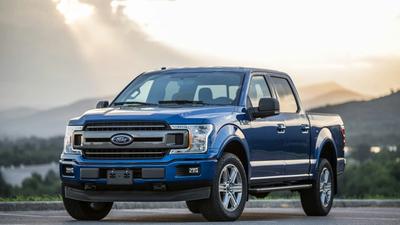
Carlos Martinez bought his dream truck in Phoenix last year - a 2024 Ford F-150 with every option he wanted. The dealer got him approved at $980 per month for 72 months. He could barely afford it, but he convinced himself it would work. Then reality hit. Insurance was $200 per month. Gas at 17 MPG cost another $250. Maintenance and registration added $100. His truck was costing him $1,530 every month before he drove a single mile for work or fun.
"I make $75,000 a year," Carlos said. "After taxes that's maybe $4,500 a month take-home. My truck payment alone is 22% of my income. With insurance and gas, I'm spending a third of everything I make just to own this thing. I can't save money. I can't take vacations. I'm one emergency away from being broke."
Carlos is part of a record-breaking statistic. In the fourth quarter of 2025, 20.3% of new car buyers - more than one in five - paid over $1,000 per month for their vehicles, according to Edmunds. That's the highest percentage ever recorded. The average new car payment hit $772 per month with people financing an average of $43,759 over increasingly long loan terms. More than one in five buyers signed loans lasting 84 months or longer. That's seven years of payments.
The problem isn't just the monthly payment. It's everything else people forget to budget for when they're sitting in the dealer's finance office staring at a number that seems almost manageable. Insurance costs have exploded - the national average for full coverage hit $2,158 per year in 2026, though drivers in expensive states like California and Florida pay over $3,000 annually. Gas prices are volatile and climbing. Maintenance costs keep rising as vehicles get more complex. Registration fees, parking, tolls - it all adds up.
Jessica Rodriguez in Denver learned this the hard way. She bought a Honda Odyssey minivan last year for her growing family. The payment was $750 per month, which felt tight but doable. She hadn't factored in that insuring a $45,000 minivan would cost $2,400 per year instead of the $1,200 she was paying on her old sedan. She hadn't calculated that filling a 19-gallon tank twice a month at Denver's $3.40 per gallon would cost $130. She definitely hadn't budgeted for the $800 set of tires she needed after one year.
"By month 14, I was maxing out credit cards to cover the van costs," Jessica said. "The $750 payment seemed fine when we bought it. Nobody told me the real cost would be closer to $1,100 a month once you add everything. We're thinking about selling it and going back to one car."

Mike Santos in Texas signed a loan that looked reasonable on paper: $750 per month for 84 months on a $45,000 Ram 1500. What he didn't calculate was the total cost. At 8.9% APR over seven years, he'll pay $62,832 total - $17,832 in interest alone. He's paying $2,547 per year just for the privilege of borrowing money. By the time the truck is paid off in 2032, it'll be worth maybe $18,000 if he's lucky. He will have spent $63,000 to own a truck worth $18,000.
Not sure which car to choose? Take our quiz and find out!
Financial advisors have a simple rule that most people ignore: the 20/4/10 rule. Put at least 20% down. Finance for no more than 4 years. Keep total transportation costs under 10% of your gross income. By that standard, someone making $75,000 should spend no more than $625 per month on their car payment, insurance, gas, and maintenance combined. Carlos is spending $1,530. He's violating the rule by a factor of 2.5.
Here's the brutal math for a typical $1,000 per month car payment scenario. Let's say you finance $50,000 at 7% APR for 72 months. Your payment is $832. Add $200 for insurance, $180 for gas at 1,000 miles per month and 25 MPG, and $100 for maintenance and registration. You're at $1,312 per month or $15,744 per year. To afford that comfortably under the 10% rule, you'd need to earn $157,440 annually. Most people buying these vehicles don't make anywhere near that much.
The loan terms keep getting longer because that's the only way dealers can make expensive cars seem affordable. Can't afford $1,200 per month? Stretch it to 84 months and pay $950 instead. The monthly number looks better, but you'll pay thousands more in interest and you'll be underwater - owing more than the car is worth - for years. Trade-in your 84-month loan after four years and you might have $8,000 negative equity to roll into your next loan, making the cycle even worse.
Some warning signs you're in a car payment trap: Your car payment is more than 15% of your monthly take-home income. You financed for longer than 60 months. You rolled negative equity from your last car into this loan. You have less than three months of expenses in emergency savings. You're using credit cards to cover basic living expenses. If any of these apply, you're financially vulnerable and one job loss or medical emergency away from defaulting.
Refinancing can help if you qualify. If your credit score has improved since you bought the car or interest rates have dropped, you might cut your payment by $100-200 per month by refinancing to a lower rate. But refinancing only makes sense if you can get at least 1-2% lower APR and you don't extend the loan term. Refinancing a 60-month loan into a new 72-month loan just to drop the payment slightly means you'll pay more total interest.
The lease versus buy calculation changes depending on your situation. Leasing a $50,000 SUV might cost $550 per month with no down payment. Buying the same vehicle costs $850 per month. Leasing looks cheaper until you realize after three years of lease payments you own nothing and need to start over with another lease or buy a car. Buying costs more monthly but after six years of payments you own a paid-off vehicle. The break-even point is roughly four to five years. If you keep cars longer than five years, buying wins. If you trade every three years anyway, leasing might save money.
Carlos in Phoenix is trying to figure out his exit strategy. He owes $62,000 on a truck worth $48,000 in trade-in value. He's $14,000 underwater. He can't afford to keep it but he can't afford to get rid of it either. His options are all bad: keep hemorrhaging money on the truck, somehow come up with $14,000 to pay off the negative equity, or let it get repossessed and destroy his credit for seven years.
Jessica in Denver is considering a voluntary repo but knows it would wreck her credit and leave her unable to buy another car. Mike in Texas is stuck in his 84-month loan for another five years with no way out. All three of them wish they'd done the math before signing.
The solution is simple but requires discipline most people don't have when they're sitting in front of a shiny new vehicle. Before you set foot in a dealership, calculate what you can actually afford. Take your monthly gross income, multiply by 10%, and that's your total transportation budget. Subtract insurance, gas, and maintenance estimates. Whatever's left is your maximum monthly payment. If that number won't buy the car you want, you can't afford the car you want.
Get pre-approved for financing before you shop so you know your real interest rate. Put down at least 20% to avoid being underwater. Finance for no more than 60 months - shorter if possible. And remember that the monthly payment the dealer quotes you isn't the real cost of owning that vehicle. The real cost is payment plus insurance plus gas plus maintenance plus depreciation plus opportunity cost of the money you're spending.
One in five Americans is now paying over $1,000 a month for a car. Most of them can't afford it. Don't be one of them.